What Western PA Homeowners Need to Know Before Starting a Backyard Project
By Jeff Showman, Owner, Showman Hardscapes | Licensed Electrician (PA #078247)
After nearly 30 years of building outdoor living spaces throughout Westmoreland and Allegheny Counties, I’ve had more conversations than I can remember with homeowners planning backyard projects. I do know one question comes up more than almost any other: “What’s the difference between a landscaper and an outdoor contractor?”
It’s a fair question, and it’s one that can save you thousands of dollars, weeks of frustration, and years of regret if you understand the answer before you sign that contract.
Why The Difference Matters
When most people think about improving their backyard, they think “landscaping.” It’s a term everybody knows. You see trucks with that word on the side every day during growing season. But here’s what I’ve learned: the word “landscaping” covers an enormous range of services, and the contractor who’s perfect for one job might be completely wrong for another.
If you’re planning to add some shrubs, refresh your mulch beds, or install a simple flagstone path, a traditional landscaper is probably exactly what you need. But if you’re dreaming about something bigger and more complicated, like a custom deck, an outdoor kitchen, a fire pit with integrated lighting, then you need a different skillset.
You need an outdoor contractor.
What Landscapers Do Best
Traditional landscaping focuses on what the industry calls “softscape” elements. This includes planting beds and garden design, lawn installation and maintenance, shrub and tree care, mulching and seasonal cleanup, irrigation systems, and basic pathway installations. These are valuable services.
A skilled landscaper can transform the living elements of your property and keep them thriving year after year. Many landscapers also offer what’s sometimes called “light hardscaping”—basic paver walkways, small garden walls, or basic patio installations.
The key word there is “basic.” Most landscaping companies excel at working with plants and soil. That’s their training, their equipment, and their daily focus. When projects move into construction territory (structural work, utility connections, load-bearing elements, electrical systems), then you’ve moved past what most landscaping companies are ready to offer.
What Outdoor Contractors Build
Outdoor contracting is construction work that happens to be outdoors. We build permanent structures that become extensions of your home.
Think about what goes into a complete outdoor living space. A quality deck isn’t just boards on posts. A deck requires engineered footings, load calculations, proper ledger board attachment, and compliance with building codes. An outdoor kitchen needs gas lines for the grill, electrical connections for lighting and appliances, and often plumbing for a sink or ice maker. A pergola with ceiling fans and lighting requires structural carpentry and electrical work integrated from the start.
These projects can’t be done properly without construction expertise. They require understanding building codes, pulling permits, and passing inspections. They need crews trained in carpentry, masonry, electrical work, and utility installation. When you hire an outdoor contractor for these projects, you’re hiring someone whose daily work involves the same skills and standards that go into building the rest of your home.
And before you ask, “yes,” at Showman Outdoor Construction, that’s the job we’re proud to do every day and we’ve done for decades for families just like yours.
The Real Cost of Choosing the Wrong Contractor
When an underequipped landscaper takes on a construction job, they’re not trying to rip you off. But they may not know what they’re getting into, or they may need to bring in subcontractors to do much of the work. Let me share what I’ve seen happen when the wrong type of contractor takes on a project outside their expertise.
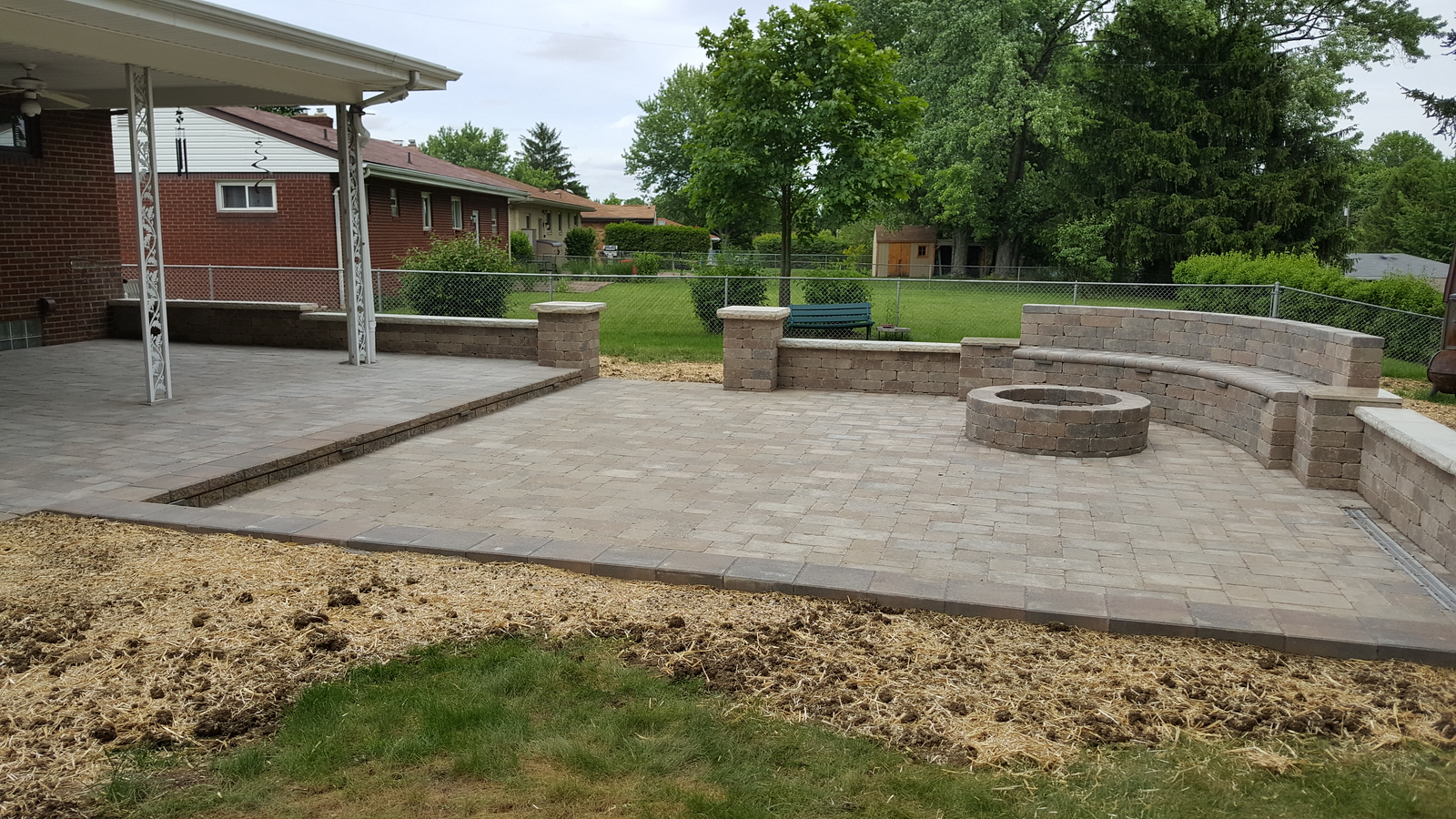
A landscaping company takes on a patio project with a built-in fire pit. They do beautiful paver work because that’s in their wheelhouse. But the gas line for the fire pit? They subcontract that to a plumber who’s never worked with their team before. The plumber’s schedule doesn’t align with the paver crew’s timeline. Now there’s a two-week delay while everyone waits. When the plumber finally arrives, he realizes the gas line route wasn’t planned into the original design. Those paver stones that were installed the week before need to come up in one section to run the line properly.
That’s not a hypothetical example. And yes, I’ve been called in to fix exactly that situation more than once myself.
Or consider the homeowner who hired a landscaper to build a deck because the quote was lower than what a construction-focused contractor offered. Six months later, the deck is bouncing when people walk on it because the joist spacing was wrong for the span. The “savings” on the original quote disappeared when it became obvious to everyone that the deck needed reinforcement.
Why “Self-Performing” Changes Everything
Have you heard that? In our industry the term is: “self-performing.” It means a contractor uses their own trained crews to complete all aspects of a project rather than subcontracting out different trades.
Most contractors (including many outdoor contractors) operate more like project managers. They sell you the job, then bring in separate subcontractors for framing, electrical, masonry, and other specialized work. Each subcontractor has their own schedule, their own standards, and their own priorities. Your project is just one of many they’re juggling.
At Showman, we self-perform every trade. Our team handles carpentry, masonry, electrical work, gas installation, and lighting. We don’t hand off pieces of your project to crews we barely know.
What does this mean for you? First, your timeline stays under control because we’re not waiting on outside crews. Second, quality stays consistent because every element meets our standards. Third, communication stays simple because you’re dealing with one team, not a rotating cast of subcontractors. And when something needs attention—during construction or years later—you know exactly who to call.
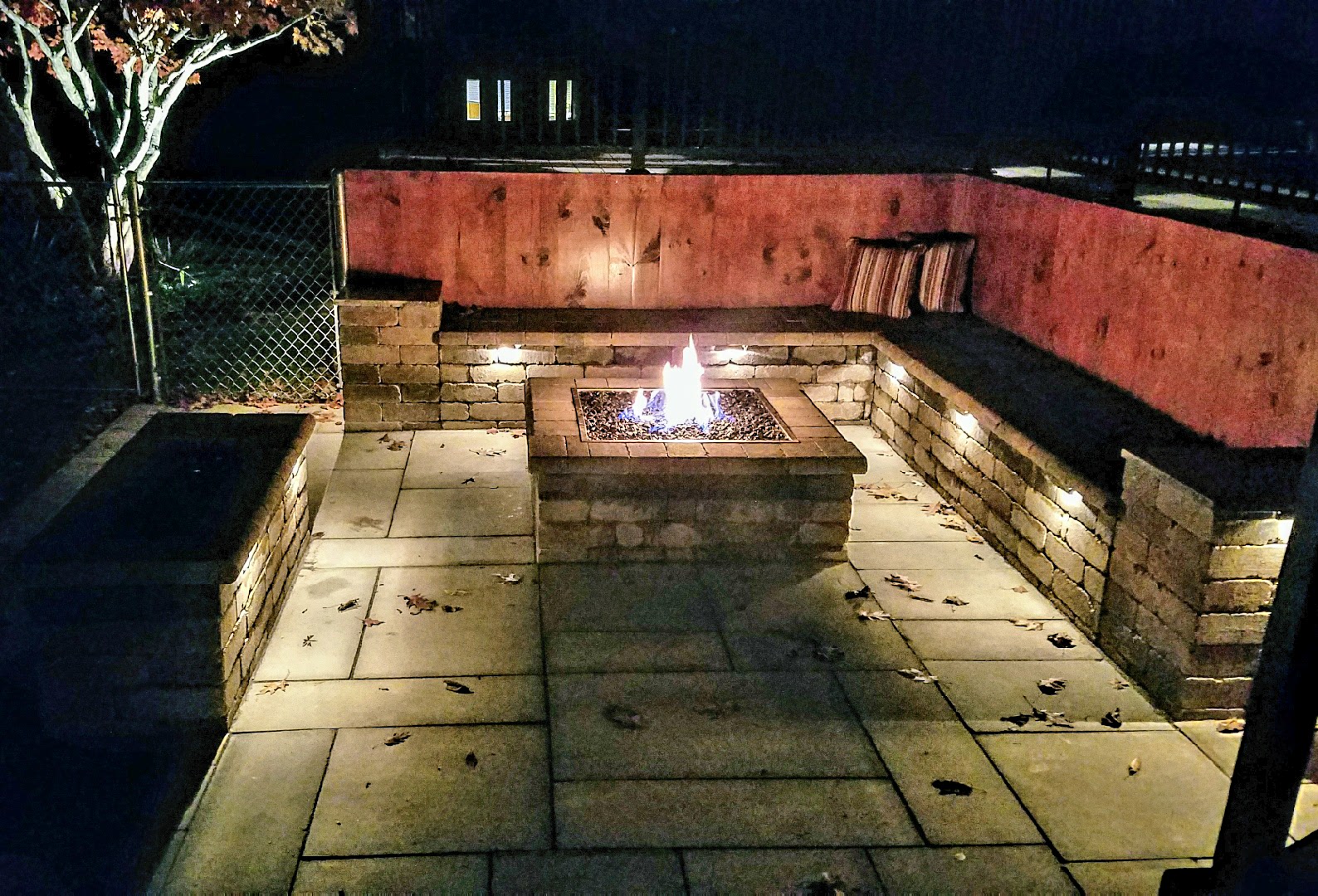
One of our clients, Brian G., put it this way in his review: “The demo and subsequent hardscaped patio, steps, seating wall and fire pit came together without any headaches. Jeff is very knowledgeable and professional. He even installed beautiful lighting on the steps and wall.”
That a seamless experience: patio, walls, fire pit, and lighting all from one crew.
The Licensed Electrician Advantage
Here’s something that surprises many homeowners: I’m a licensed electrician (PA License #078247). That might seem like an unusual credential for someone building patios and pergolas, but it’s actually central to how we approach projects.
Think about what makes an outdoor living space truly enjoyable after sunset. Pathway lighting that guides guests safely. Ambient lighting that creates atmosphere. Task lighting over your outdoor kitchen so you can actually see what you’re grilling. Accent lighting that highlights your beautiful new construction.
Most contractors have to bring in an outside electrician for this work. That means coordinating schedules, explaining the design vision to someone who wasn’t part of the planning, and hoping the electrical work integrates well with everything else.
Our approach is different. We plan electrical into projects from day one. Conduit goes in before the pavers are laid. Junction boxes get positioned during framing, not added as an afterthought. The result is cleaner installations, no retrofit headaches, and lighting that actually works with your space instead of looking tacked on.
How to Choose the Right Contractor for Your Project
After decades of building outdoor spaces, here’s my advice for homeowners trying to navigate this decision.
- If your project primarily involves plants, soil, lawn, irrigation, or simple garden structures, a quality landscaper is your best choice. Look for someone with strong horticultural knowledge and good references for the type of planting you want.
- If your project involves structural construction like decks, pergolas, outdoor kitchens, and major hardscape installations, then look for an outdoor contractor with construction expertise.
- Ask whether they self-perform or subcontract. If they subcontract, ask how they manage quality and timelines across multiple crews.
- If your project involves electrical, gas, or plumbing, ask about licensing and who actually performs that work. Will it be in-house expertise or an outside subcontractor?
- If your project combines multiple elements—say, a patio with a fire pit, seating walls, and lighting—look for a contractor who can handle all of it under one roof. The integration matters more than most people realize.
As one of our repeat clients, James S., shared: “This was our fourth project with Jeff and he will be doing a fifth one for us next year. He does artistic, individualistic, not ‘stamped-out’ work at a more than fair price.”
That kind of ongoing relationship, where clients keep coming back, is only possible when you’re working with a contractor who truly fits your project scope.
The Questions That Reveal Contractor Fit
When you’re interviewing contractors, certain questions quickly reveal whether they’re the right fit for your project.
- Ask “What permits will this project require, and who handles them?” A contractor experienced in construction-grade work will know exactly what’s needed and handle the process for you. Someone outside their depth might seem uncertain or suggest skipping permits altogether.
- Ask “Will your own crews do all the work, or will you subcontract parts of it?” Listen carefully to the answer. There’s nothing inherently wrong with subcontracting, but you should know what you’re getting into and how coordination will be managed.
- Ask “How do you handle changes or problems that come up during construction?” Every project has surprises. The answer reveals whether you’re dealing with a company that takes ownership or one that points fingers.
- Ask “Can I see examples of projects similar to mine?” A contractor should have a portfolio of work that matches your vision in scale and complexity.
Making the Investment That Lasts
Your backyard is an extension of your home. That’s how to think of it. A place where your family gathers, where memories get made, where you unwind after long days. The contractor you choose will shape how that space looks, functions, and lasts for years to come.
Understanding the difference between landscaping and outdoor contracting isn’t about one being better than the other. It’s about matching the right expertise to your dream project. Get that match right, and you’ll end up with an outdoor space that makes you and your family very happy for years to come, and improves your property value too!
As Gina S. wrote about her experience working with us: “Working with Jeff was a stress-free, enjoyable experience. Jeff has a vast amount of experience/knowledge and always gives 100% effort.”
That’s what choosing the right contractor makes possible. You end up with not just a finished project, but an experience that feels right from first conversation to final walkthrough.